IPv4.Global Blog
Driven by leaders, IPv4.Global is founded in expertise, efficiency, and industry knowledge. From serving on advisory boards, to attending regional meetings, our team is integral to the IP community. Read from our experts first-hand and subscribe to our Medium.
Sizing IPv4 for a BEAD Build: How Many Addresses Does a Subgrant Actually Require?
BEAD has moved from planning to construction. State final proposals have been approved, subgrantees have been selected, and network builds funded by the $42.45 billion program will run through the end of the decade. Very few budgets itemize IP addresses. Read more

BYOIP Strategies in the Cloud: Do Cloud-Provided IPs Really Save You Money?
Cloud-provided IPs may be convenient, but are they really the most cost-effective option? BYOIP can offer greater control, portability, and long-term savings. Read more

The Effects of AI Expansion on Testing Models and Infrastructure
AI expansion is forcing operators to examine the network as a connected system rather than a collection of links, devices, and applications that can each be expanded independently. Read more

BEAD, Capital Markets, and the M&A Pressure on Small ISPs and WISPs
The telecommunications and broadband sectors are in a period of serious consolidation. So active, in fact, that it is sometimes referred to as “Broadband M&A 2.0.” Smaller ISPs and WISPs are being swept up in this wave of mergers and acquisitions. Read more
Consolidating and Selling IPv4 Space with ProVision
Most organizations that hold IPv4 space know roughly how much they have. What they often don’t know is how much of it they’re actually using. That gap is, in many cases, quite valuable. Read more
Higher Education & 2026 IPv4 Sales
Between roughly 2015 and 2024, a wave of colleges and universities discovered they were sitting on eight-figure IPv4 assets. These assets have since generated hundreds of millions of dollars in aggregate for higher education, and the window, though changed, remains open. Read more
Broadband Programs in Canada
Canada has a goal of providing 98% of the country’s population with “high-speed” or “broadband” internet access by the end of 2026 with the remaining 2% covered by 2030. Given Canada’s size and population, major highway and road coverage, along with institutions, households, and businesses are targeted. Read more
IPAM & DDI Guide for Network Administration
There is a tension every network administrator knows well: when the network works, it’s invisible. When it fails, it’s everybody’s emergency. Read more
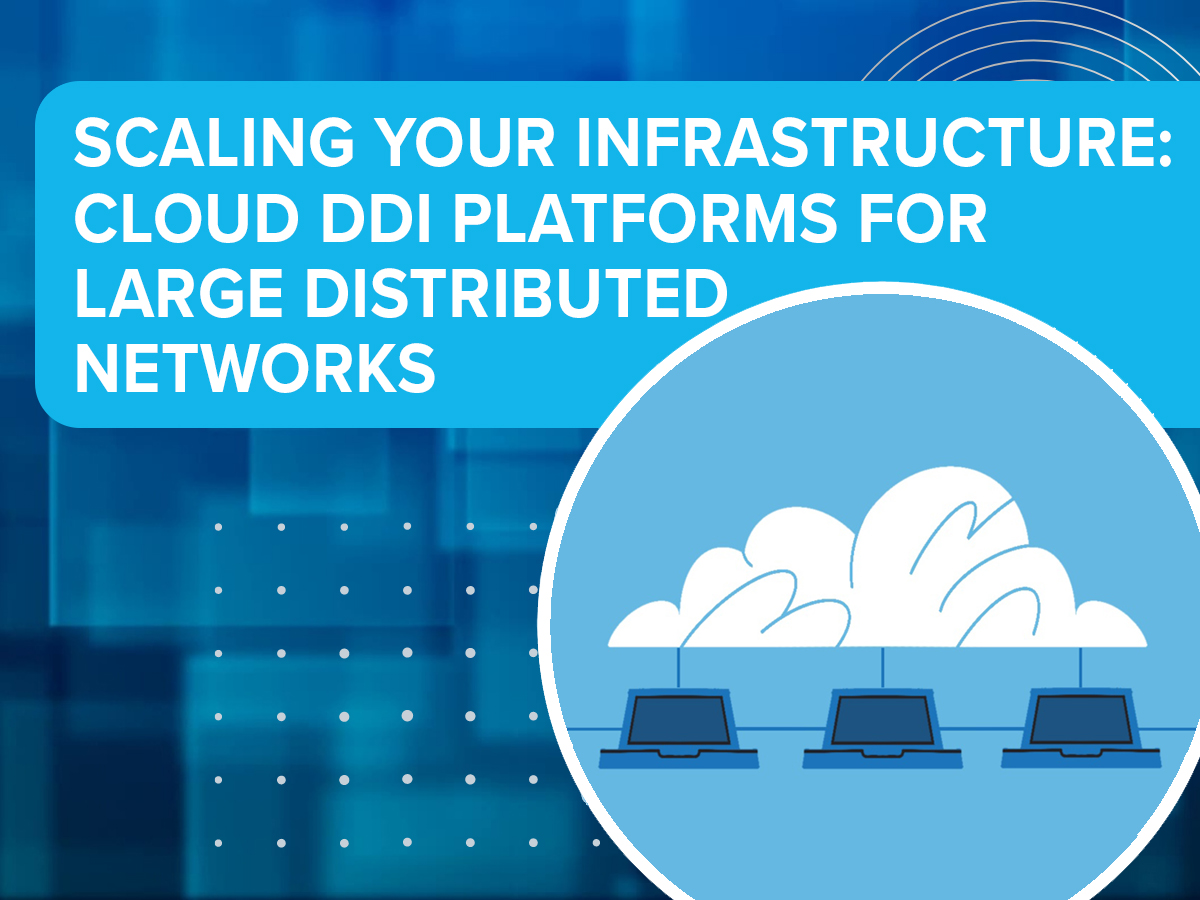
Scaling Your Infrastructure: Cloud DDI Platforms for Large Distributed Networks
Cloud DDI solves coordination issues by unifying IPAM, DNS, and DHCP across regions, providers, and environments, to ensure the network layer scales with everything on it. Read more
The Large-Block Strategy Is Back: How to Profit from Large-Block IPv4 Arbitrage Today
Subdividing larger allocations into smaller blocks that command marginally higher prices per address has returned as a logical strategy. Read more

Building RIPE SEE: A Conversation with Jan Žorž About Community, Trust, and the Work Behind a Regional Event
The Internet is not only built out of routers, protocols, and cables. It is also built out of relationships. Meetings like SEE help make those relationships possible. Read more
BEAD Collaborations: ISPs with Government and Non-Profit Entities
The BEAD program provides federal funds for broadband deployment in underserved areas, and many ISPs with subgrants are discovering the benefits of working with regional and local entities, local governments, and others. Read more